
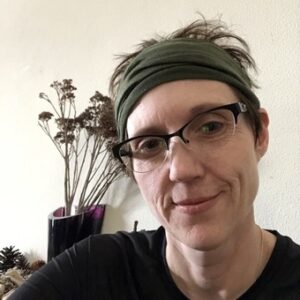
Stephanie Morrissette
Stephanie is an avid naturalist and a Library Assistant in the Adult Services Department at CDPL.
As a library assistant in the Adult Services Department at Crawfordsville District Public Library, I have had the privilege of serving as the Library Naturalist, exploring environmental science through public programming. I have had the opportunity to share my education, experience, and passion through interacting with the community, engaging with the intention of creating a contagious environment that cultivates learning and expands our understanding of the natural world. All these ideas come to life through the library! But where did environmental education begin?
Back in the late 1800s, when land use was growing across the country, John Muir, who was known lovingly as the “Father of the National Park Service”, pioneered environmental preservation. He wrote “The Wilderness World of John Muir” (921 Muir, J.) to share his enthusiasm and passion for saving our incredible lands. Mr. Muir was a renowned naturalist who also founded the well-known non-profit, the Sierra Club.
President Ulysses S. Grant signed into legislation our first national park, Yellowstone, on March 1, 1872. In the 1880s, Aldo Leopold, the Father of American Conservation, philosopher and student of nature, promoted environmental conservation; he authored “A Sand County Almanac” (508.73 Leo), a book I hold dear to my heart and highly recommend. In 1905, President Roosevelt created the U.S. Forest Service from the Department of Agriculture, and in 1916, President Wilson created the federal National Park Service within the Department of the Interior. He also created wildlife refuges that went on to be managed by the U.S. Fish and Wildlife Service.
Later, in the 1960s, Rachel Carson (“Silent Spring,” 632 Car) brought attention to environmental justice with the critical need to ensure the survival of our environments in a healthy, sustainable manner, and increased legislation and awareness on the need to save our lands; the need to provide environmental law to protect natural resources needed advancement, including the Endangered Species Act, Clean Air Act, Clean Water Act, National Environmental Policy Act, and finally, the EPA (Environmental Protection Agency). And in Indiana, we have our very own Charles “Charlie” Deam, famous author of “Flora of Indiana” (RG 581.9 Dea) and other books, as well as our beloved Marion T. Jackson, author of “A Natural Heritage of Indiana” (RG 508.772 Natural), one of my most treasured books. The two above books are located in our Local History Collection on the second floor at CDPL.
As a scientist and as the Library Naturalist within the Adult Services Department, I have continued to promote education and respect for our wilderness and wildlife with classroom presentations and local park hikes. Sharing this with my community has been humbling for me, and I have loved helping patrons love nature as much as I do. I encourage all community members to continue their pursuit of knowledge through one of the best local sources for information and learning: the public library. Crawfordsville District Public Library has innumerable resources to choose from, and I have often heard patrons excited to hear about all the services we offer. The smiles are so rewarding! To promote life-long learning, begin with your local library.
I would like to thank all the wonderful, supportive staff at CDPL. It has been a privilege to serve the community with them, and my experiences here honor the spirit of discovery, learning, and how libraries can transform the world. I love my library, and will continue to grow forward in learning and understanding nature, and sharing this information with my community. As this Library Naturalist concludes her seasons at CDPL, I am honored to have worked with a great team in service to the community. Thank you to all the patrons who joined in for the love of learning. Read on, Crawfordsville, and never stop exploring.
 EN
EN  ES
ES